Myofunctional Therapy



myofunctional Therapy
Myofunctional Therapy helps both children and adults retrain the orofacial muscles to correct and relieve functional issues while also enhancing facial appearance. Our Myofunctional Therapists help establish nasal breathing, create a proper lip seal, promote proper tongue posture, and produce correct swallowing.

Early Intervention For Children
Correcting poor oral habits through myofunctional therapy during childhood supports proper development of the jaws, face, and airway. It helps prevent abnormal facial growth, narrowed airways, and misaligned teeth.
Infants who struggle with breastfeeding often develop swallowing difficulties, frequently mislabeled as "picky eating" when the real issue is myofunctional dysfunction. If left untreated, speech problems commonly appear by age 2, and by age 5, malocclusion and future orthodontic issues develop. Early intervention is important, because by the teen years, facial growth is largely complete, which limits the effectiveness of orthodontic treatment.
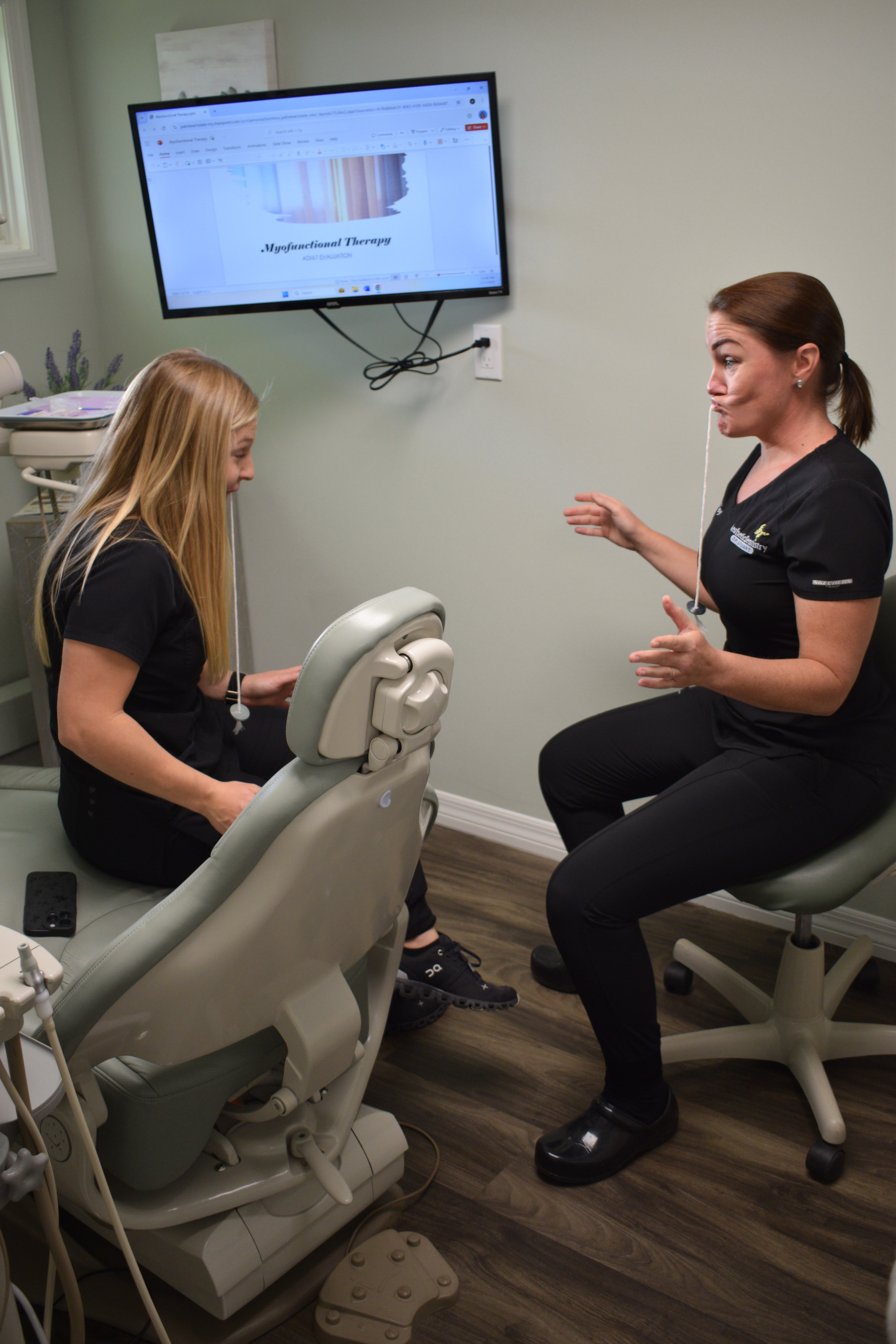

Myofunctional therapyFor Adults
Among adults, undiagnosed myofunctional disorders can cause snoring, sleep apnea, fatigue, jaw pain, teeth grinding, mouth breathing, and swallowing difficulties. Treatment can improve breathing, sleep, energy, facial appearance, and comfort within just a few months.
Goals of MyofunctionalTherapy
Ensure nasal breathing
Nasal breathing leads to a relaxation response as it cleans, warms, and humidifies the air entering your body. On the other hand, open mouth breathing can result in growth patterns that lead to symptoms described above.
Fix resting tongue placement
Tongue placement is critical to myofunctional therapy. When the tongue rests away from its proper position, it often results in facial development issues and bite concerns.
Retrain proper swallowing
Proper swallowing patterns support balanced facial development and oral function. When swallowing is done incorrectly, the tongue and facial muscles can place excess pressure on the teeth and jaw, contributing to bite and alignment issues. Retraining the brain and muscles to swallow correctly takes time and consistency, but it plays a vital role in long-term oral health and healthy development.


Tongue Ties &
Lip Ties
Do you wake up with headaches, experience mood changes, or feel unrested despite a full night’s sleep? Do you have a child with ADHD, behavioral challenges, or learning difficulties? These can all be signs of impaired breathing. Breathing affects far more systems in the body than many people realize—especially during critical stages of growth and development.
Tongue ties and lip ties can play a significant role in breathing dysfunction. When the tongue or lip is restricted, proper tongue posture and nasal breathing become difficult to maintain. This can contribute to mouth breathing, poor airway support, and altered facial and jaw development over time.
In both children and adults, restricted oral tissues may increase the risk of sleep-disordered breathing, including obstructive sleep apnea. Obstructive sleep apnea occurs when the airway becomes partially or fully blocked during sleep, leading to repeated drops in blood oxygen levels throughout the night. In children, these breathing disruptions often show up as hyperactivity, poor focus, bedwetting, or delayed development rather than excessive sleepiness.
Over time, untreated breathing and airway issues—often influenced by oral restrictions—have been linked to conditions such as hypertension, anxiety, obesity, diabetes, asthma, depression, and other health concerns. Early evaluation and treatment of tongue ties and lip ties, especially in children, can support healthier breathing, improved sleep quality, and proper facial and airway development.
Tongue Tie:
A tongue tie occurs when the tongue is tightly attached to the floor of the mouth, restricting normal movement. This limitation can interfere with breastfeeding, speech development, and proper swallowing. It may also affect everyday activities such as licking ice cream, kissing, or sticking out the tongue. A tongue tie can affect facial development and can contribute to broader oral and facial function concerns.
Lip Tie:
A lip tie occurs when the upper lip remains tightly attached to the gum, limiting normal movement. This restriction can lead to breastfeeding pain, feeding difficulties, and speech concerns. It may also contribute to jaw clicking, a gap between the front teeth, and challenges with common facial movements and expressions.
LaserTreatment
A frenectomy releases tongue-ties and lip-ties to restore proper function. We treat all ages with the latest in CO2 laser technology, the DEKA laser. During a frenectomy, we use the laser to release the frenum under the tongue or upper lip to allow for better range of motion. It’s a fast treatment and fast recovery with no sedation needed, very little discomfort, and almost no bleeding. Some babies and children actually sleep through the procedure.


Meet
Ashley
Ashley Horn, CRDH
Ashley Horn is a Certified Registered Dental Hygienist and Orofacial Myofunctional Therapist dedicated to helping patients of all ages achieve optimal oral and airway health. She completed advanced training in Orofacial Myofunctional Disorders and Myofunctional Therapy at the Las Vegas Institute for Advanced Dental Studies in 2020 and continued to expand her knowledge through the Academy of Orofacial Myofunctional Therapy in 2021.
Ashley is passionate about supporting proper airway development, facial growth, and functional harmony to promote overall health and wellness. She truly enjoys building meaningful relationships with her patients and finds it incredibly rewarding to witness their transformations as they achieve improved breathing, enhanced facial development, and greater confidence.
Connect WITH US
We look forward to meeting you. Call (772) 463-4026 or request an appointment online to set up your first visit. We’ll be in touch soon.
