Improve Breathing and Sleep Quality with Myofunctional Therapy


Myofunctional Therapy: How Retraining Your Muscles Can Improve Breathing and Sleep
Maybe you've been waking up feeling less rested than you expected, catching yourself breathing through your mouth during the day, or wondering why sleep never seems quite as refreshing as it should. Or perhaps your dentist has mentioned tongue posture or airway health, and you're curious how those things are connected.
Myofunctional therapy is a structured program that retrains the muscles of the tongue, lips, cheeks, and face to support healthier breathing, swallowing, and oral function. Rather than focusing on symptoms alone, it helps improve the movement patterns that influence how your mouth and airway work every day.
At Aesthetic Dentistry of Stuart, Dr. Crary and our team use myofunctional therapy as part of a comprehensive approach to airway health, helping both children and adults build healthier habits that support long-term oral and overall wellness.
Quick Overview
- Myofunctional therapy retrains the muscles of the tongue, lips, and face to encourage healthy breathing, swallowing, and oral function.
- It can benefit both children and adults experiencing mouth breathing, poor tongue posture, sleep-disordered breathing, or related concerns.
- Treatment combines guided exercises during appointments with simple practice at home between visits.
- Therapy is often recommended alongside other airway or dental treatments as part of a personalized care plan.
- A consultation at Aesthetic Dentistry of Stuart helps determine whether myofunctional therapy is appropriate for your needs.
What Myofunctional Therapy Actually Is
Orofacial myofunctional therapy is a structured program of exercises that improves how the muscles of your mouth and face work together. The focus isn't on chewing or speaking, but on the patterns your muscles follow throughout the day and while you sleep.
Treatment primarily addresses three important functions:
- Where your tongue naturally rests when your mouth is closed
- Whether your lips stay comfortably sealed at rest
- Whether you breathe through your nose instead of your mouth
When these patterns aren't working as they should, they can affect more than just your mouth. They may contribute to mouth breathing, changes in tooth alignment, disrupted sleep, jaw development, and other airway-related concerns.
Myofunctional therapy doesn't rely on surgery or a dental appliance alone. Instead, it uses guided exercises to retrain the muscles involved in breathing, swallowing, and resting posture. During your appointments, you'll learn techniques from a trained provider and continue practicing them at home between visits. Like any form of muscle training, consistent practice is what leads to lasting improvement.
For many people, this approach feels different because it's focused on improving function rather than simply managing symptoms. At Aesthetic Dentistry of Stuart, myofunctional therapy is often combined with the Quiet Nite CO2 laser procedure and oral appliances as part of a larger airway-focused treatment plan designed to support healthier breathing and long-term oral health.
How Tongue Posture Affects Breathing
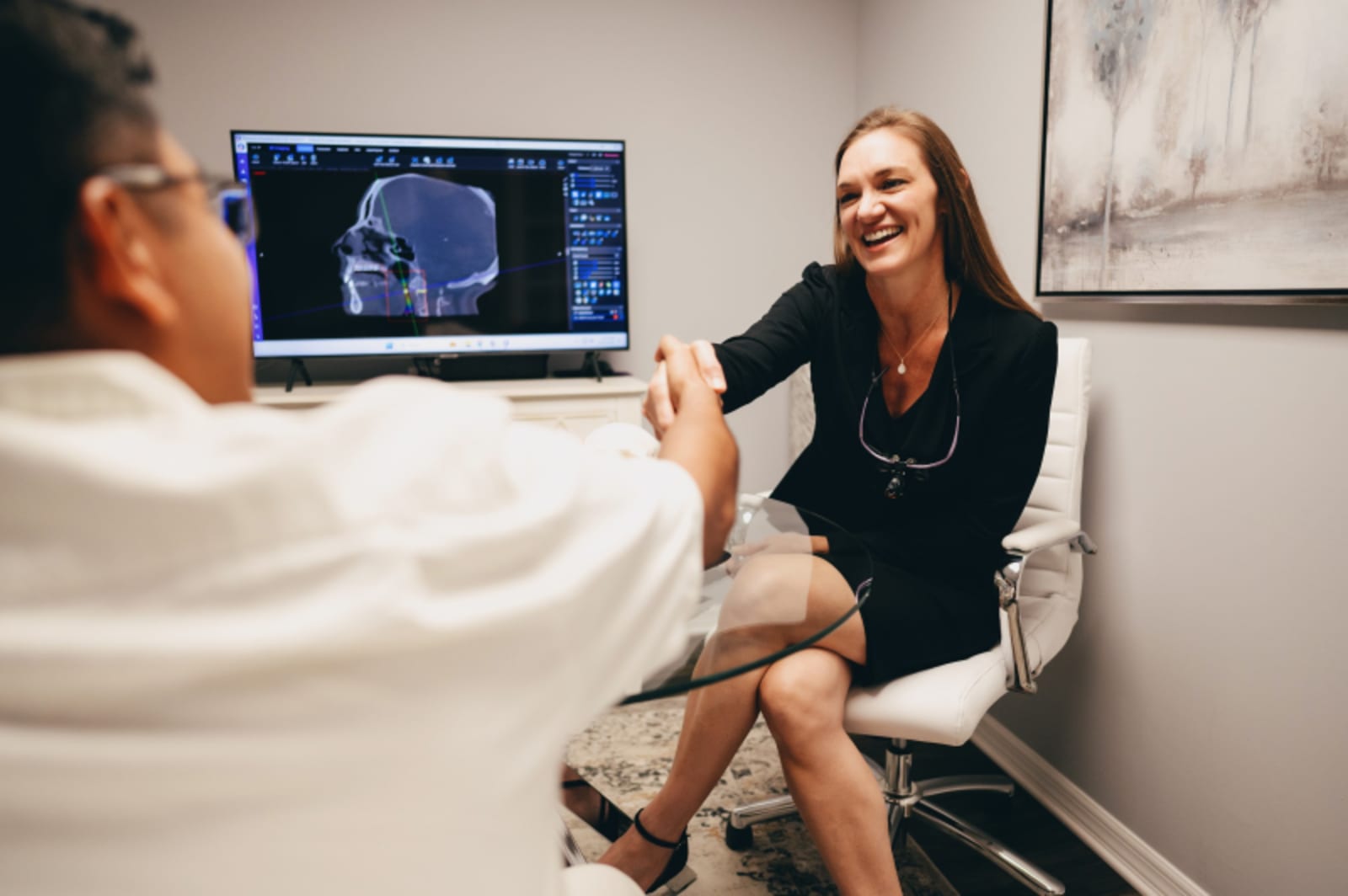
The way your tongue rests may not seem important, but it plays a meaningful role in how your mouth and airway function.
Ideally, the tongue rests gently against the roof of the mouth with the lips comfortably closed and breathing happening through the nose. This resting position supports healthy oral function and helps encourage nasal breathing throughout the day and during sleep.
When the tongue consistently rests low in the mouth or the lips remain open, mouth breathing can become more common. Over time, these patterns may influence oral development, jaw position, sleep quality, and overall airway function.
Nasal breathing offers several advantages because it naturally:
- Filters airborne particles before they reach the lungs
- Warms and humidifies the air you breathe
- Encourages a slower, more efficient breathing pattern
By comparison, habitual mouth breathing can contribute to a dry mouth, increased oral health concerns, and disrupted sleep for some people.
Because tongue posture and breathing habits are connected, evaluating both can provide helpful insight when someone experiences ongoing airway or sleep-related concerns.
Why Muscle Function Can Influence Sleep
During sleep, the muscles throughout the body naturally relax, including those that help support the tongue and airway. If those muscles aren't functioning well, the airway may become more prone to narrowing, which can contribute to snoring, restless sleep, or other breathing-related concerns.
It's important to understand what myofunctional therapy can and cannot do. It is not a cure for obstructive sleep apnea, and it isn't intended to replace treatments such as CPAP when they're medically indicated.
Instead, myofunctional therapy focuses on improving the muscle function involved in breathing, swallowing, and tongue posture. For some people, that makes it a valuable complement to other airway treatments as part of a broader care plan.
If you've been dealing with sleep concerns and still feel like you don't have the full picture, an evaluation may help identify whether oral muscle function is contributing. At Aesthetic Dentistry of Stuart, myofunctional therapy is often considered alongside other airway-focused services, including oral appliances and the Quiet Nite CO2 laser procedure, to support long-term breathing and sleep health.
Who May Benefit from Myofunctional Therapy?

Although myofunctional therapy is often associated with children, adults can benefit from it as well. Many people don't realize that breathing and tongue posture habits can continue to affect oral and airway health throughout life.
You may be a good candidate if you:
- Frequently breathe through your mouth during the day or while sleeping
- Snore regularly
- Wake up feeling unrested despite getting enough sleep
- Have been told you have low tongue posture or other airway concerns
- Want to improve breathing patterns as part of a comprehensive airway treatment plan
Every situation is different, so the first step is a thorough evaluation. In some cases, myofunctional therapy may be recommended on its own, while in others it works best alongside treatments such as orthodontics, oral appliance therapy, the Quiet Nite CO2 laser procedure, or sleep medicine.
Why Would a Dentist Recommend Myofunctional Therapy?
Because the mouth is where the airway begins, dentists are often in a unique position to recognize patterns that affect both oral health and breathing.
During a comprehensive evaluation, a dentist may notice signs such as mouth breathing, tongue posture concerns, jaw development, bite alignment, or tooth wear that suggest oral muscle function deserves a closer look. These observations can help determine whether additional evaluation or myofunctional therapy may be appropriate.
At Aesthetic Dentistry of Stuart, airway health is considered alongside overall oral health. When appropriate, myofunctional therapy can become one part of a personalized treatment plan designed to improve function, not just address individual symptoms.
Wondering Whether Myofunctional Therapy Could Help?
If you've been dealing with snoring, mouth breathing, restless sleep, or other airway concerns, it may be worth finding out whether oral muscle function is part of the picture.
A consultation at Aesthetic Dentistry of Stuart is an opportunity to discuss your symptoms, evaluate how your mouth and airway are functioning, and determine whether myofunctional therapy could play a role in your care, on its own or alongside treatments like the Quiet Nite CO2 laser procedure or oral appliances. If another approach makes more sense, we'll explain that too.
To learn more or schedule an appointment, call (772) 463-4026. We're here to help you better understand your options and build a treatment plan that's right for you.
Connect WITH US
We look forward to meeting you. Call (772) 463-4026 or request an appointment online to set up your first visit. We’ll be in touch soon.
